When a DJ truly connects with an audience, the result feels almost magical. The crowd moves as one, energy rises and falls, and the atmosphere becomes electric. This isn’t accidental. Behind every great set is a deep understanding of music, timing, psychology, and human emotion.
This article explores how DJs create energy that controls the crowd, turning sound into a powerful collective experience.
Reading the Crowd in Real Time
Energy Before Song Selection
Great DJs don’t just play music—they observe. Body language, movement, volume of cheers, and even facial expressions help DJs gauge crowd mood.
Key signals DJs watch for include:
- Dance floor density
- Movement intensity
- Reaction to tempo changes
By constantly reading these cues, DJs adjust their set dynamically, maintaining control without forcing direction.
🔗 Outbound link: Resident Advisor – DJ Techniques & Crowd Reading
https://ra.co/features
Building Energy Through BPM Control
Tempo as an Emotional Lever
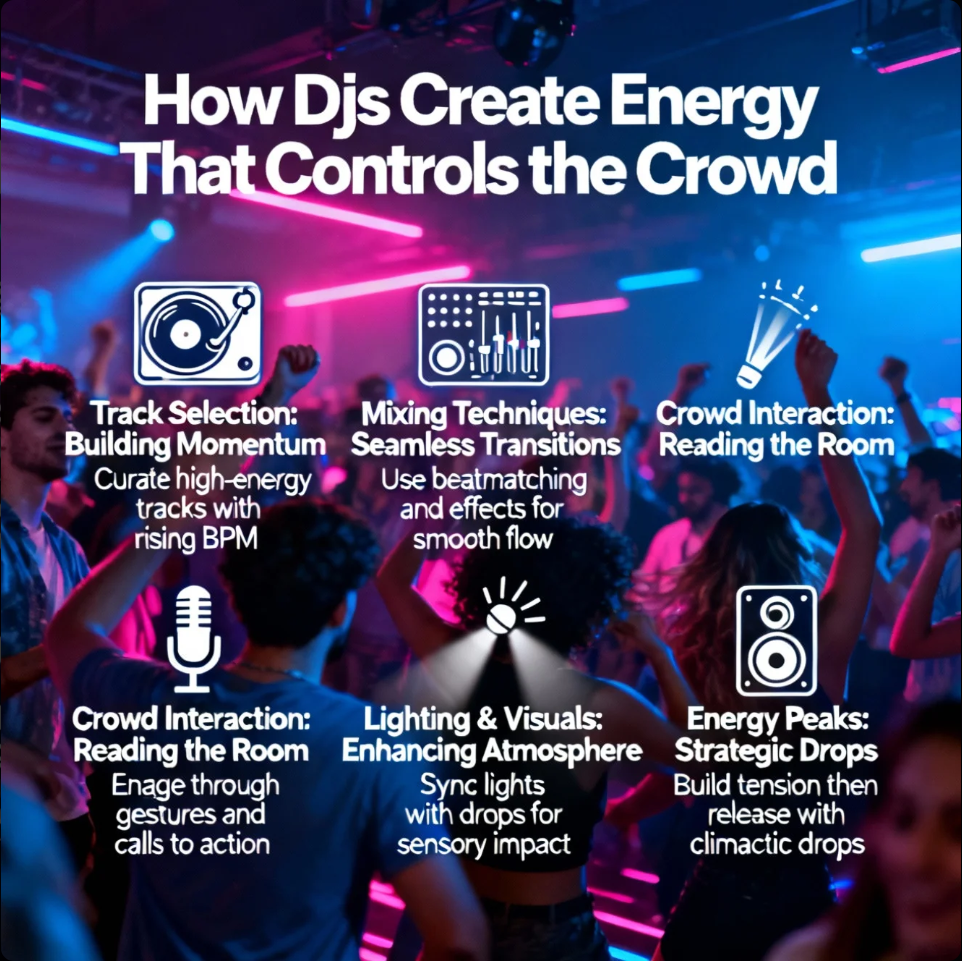
One of the most powerful tools DJs use is BPM (beats per minute). Gradual tempo increases subtly raise heart rates and excitement levels without the crowd consciously noticing.
Common techniques include:
- Starting with mid-tempo tracks
- Slowly increasing BPM over time
- Saving peak tempos for emotional highs
This creates a natural energy curve rather than chaotic spikes.
Track Selection and Emotional Storytelling
Music as Narrative
DJs structure sets like stories, using tracks to evoke different emotions:
- Familiar songs build trust
- Unexpected drops spark excitement
- Melodic breakdowns create emotional release
Each transition contributes to a larger narrative arc, keeping the crowd engaged and emotionally invested.
🔗 Outbound link: DJ TechTools – Mixing & Energy Flow
https://djtechtools.com
The Power of Transitions and Timing
Energy Lives Between the Songs
Smooth transitions maintain momentum, while intentional pauses can amplify anticipation. DJs use:
- Long blends to sustain flow
- Quick cuts for surprise
- Silence or breakdowns to reset attention
Timing a drop perfectly—especially after tension—is one of the strongest ways to control crowd reaction.
Bass, Drops, and Physical Response
Sound You Feel, Not Just Hear
Low frequencies directly affect the body. Heavy bass creates a physical sensation that:
- Encourages movement
- Intensifies emotional response
- Anchors rhythm collectively
When paired with a well-timed drop, bass becomes a physical command that unites the crowd instinctively.
Lighting, Visuals, and Sensory Synchronization
Energy Beyond Sound
Modern DJs often work alongside lighting and visual teams. Coordinated visuals:
- Reinforce musical drops
- Signal energy shifts
- Amplify emotional moments
When sound and sight align, the crowd experiences a fully immersive environment—making energy control even more effective.
🔗 Outbound link: Mixmag – The Science of Clubbing
https://mixmag.net
Confidence and Presence Behind the Decks
Energy Is Contagious
A DJ’s body language matters. Confidence, movement, and visible enjoyment transmit energy directly to the audience. When DJs believe in the moment, the crowd follows.
Control doesn’t come from domination—it comes from trust and connection.
Why Crowd Control Feels Effortless When Done Right
Successful DJs don’t force reactions. Instead, they:
- Guide energy gradually
- Respect the crowd’s rhythm
- Respond rather than dictate
This balance creates a shared experience where the crowd feels free—while still being subtly led.
Conclusion
Understanding how DJs create energy that controls the crowd reveals a craft built on intuition, technique, and emotional intelligence. Through tempo control, track storytelling, precise timing, and sensory synchronization, DJs transform sound into movement and emotion.
At its best, DJing isn’t about control—it’s about collective energy, shaped and shared in real time.